
Buying an independent pharmacy in New York can be a smart way to enter a stable healthcare market. Many neighborhoods still depend on local pharmacies for prescriptions, health products, and personal support. An existing pharmacy can offer a customer base, established systems, and a strong presence in the community.
For buyers who want to understand how to buy an independent pharmacy in New York, the local market offers strong potential. Many neighborhoods still rely on nearby pharmacies for prescriptions, guidance, and daily health needs. Patients often prefer a store where service feels personal and familiar.
Understanding the Independent Pharmacy Market in New York
New York has a large and active pharmacy market. The demand for medications, wellness products, and routine prescription support remains steady across many areas. Independent pharmacies continue to perform well because they offer attention that chain stores often fail to match.
Local pharmacies do more than fill prescriptions. They answer questions, guide patients, and help people manage ongoing treatment. In many neighborhoods, that direct support becomes the main reason patients stay loyal.
This market can be attractive to investors seeking a healthcare-related business with repeat demand. Buyers often look for stores with stable prescription volume, reliable staff, and a trusted local presence.
For those exploring available pharmacy opportunities, reviewing independent pharmacy listings can help buyers compare options and better understand market potential.
Why Buying an Existing Pharmacy Is Often the Better Choice
Starting a new pharmacy takes time, capital, and patience. A new owner must handle licensing, supplier setup, technology systems, and patient growth from the ground up. That path can be slow and expensive.
An existing pharmacy offers a stronger starting point. It usually has an operating system, a regular customer base, and ongoing prescription activity. This can reduce the time needed to generate steady revenue.
An established store may also come with trained employees and active vendor relationships. These elements can support a smoother ownership transition.
Another major advantage is local trust. Patients already know the store. That familiarity can help the new owner keep the business stable after the sale.
Because of these benefits, many investors choose to buy an independent pharmacy in New York rather than build one from scratch.
Choosing the Right Pharmacy Location in New York
Location can shape the future of a pharmacy business. Some neighborhoods generate stronger prescription demand because of age, population density, or access to nearby clinics.
A buyer should study the community before moving forward. Areas with older residents may create a higher demand for maintenance medications. Family-focused neighborhoods may support stronger sales in general care and child health products.
Nearby healthcare traffic also matters. A pharmacy near medical offices or outpatient centers may see a steady flow of patients.
Competition should be reviewed with care. A crowded area may look risky at first. Yet a strong location with enough patient traffic can still support a pharmacy if the service experience stands out.
Smart buyers look at visibility, parking, foot traffic, and ease of access. These details affect convenience, and convenience often affects retention.
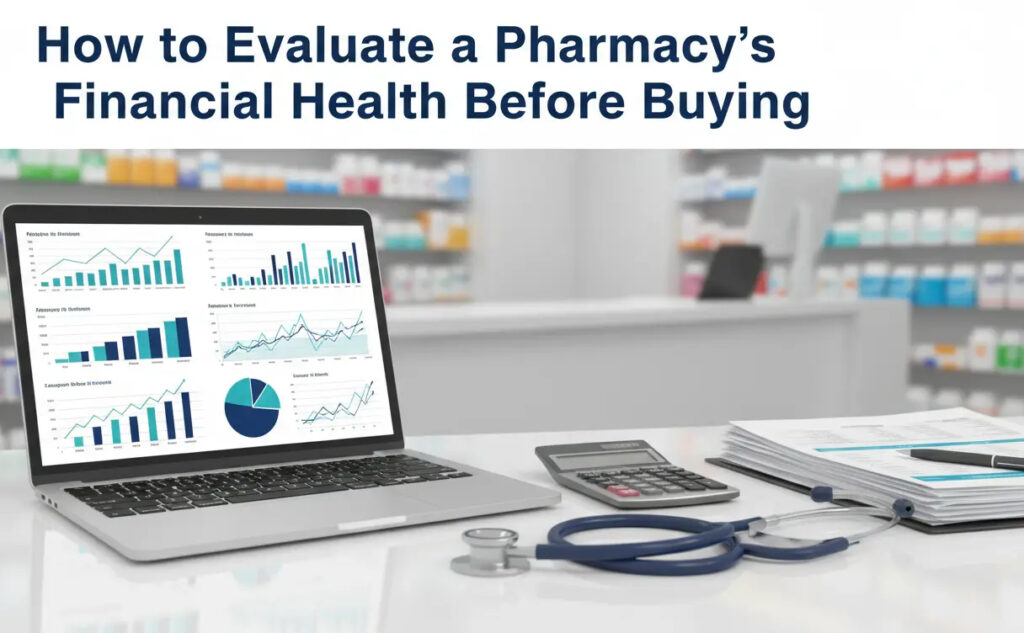
How to Evaluate a Pharmacy’s Financial Health Before Buying
Financial review is one of the most important steps in the buying process. A pharmacy may appear busy from the outside while hiding weak profit margins or unstable cash flow.
Buyers should request recent financial statements, tax returns, prescription volume reports, reimbursement summaries, rent details, payroll costs, and wholesaler invoices. These documents help reveal how the business performs over time.
Prescription count is a useful measure because it shows customer activity and demand consistency. A stable trend often signals a healthier operation.
It is also important to review margins. Revenue alone does not show true business strength. Buyers need to understand how much income remains after inventory, payroll, rent, and other operating costs.
A careful review gives a clearer view of whether the independent pharmacy in New York you plan to buy can remain profitable after transfer.
Licensing and Regulatory Requirements for Buying a Pharmacy in New York
Pharmacies operate in a regulated environment. Buyers must verify that all licenses, registrations, and legal requirements are in proper order before completing a deal.
A New York pharmacy must meet state licensing standards, ownership requirements, recordkeeping rules, and prescription-handling regulations before a transfer can proceed. The business must also maintain patient safety and compliance standards throughout the ownership change.
Insurance participation, PBM relationships, and reimbursement terms are equally important when purchasing a pharmacy. Many pharmacies rely heavily on agreements with pharmacy benefit managers and insurance networks. A buyer should confirm whether those contracts can continue after the change in ownership.
Any missing approval can slow the transfer process or affect revenue after the sale. That is why legal review matters.
Working with an experienced attorney and pharmacy advisor can help reduce risk during this stage.
Assessing Staff and Operations
A pharmacy is only as strong as its daily operations. Staff members keep prescriptions moving, help patients, and support the store’s reputation.
Before buying, review the current team structure. Find out who manages prescriptions, billing, inventory, and front desk activity. Experienced staff can make the transition easier for a new owner.
Retention is also important. Patients often trust people they already know. Keeping familiar employees can protect customer relationships after the business changes hands.
Buyers should also study the systems behind the counter. This includes pharmacy software, billing workflow, refill management, and daily operating routines.
A well-organized pharmacy tends to deliver better service and fewer internal problems.
Inventory and Supplier Relationships
Inventory has real value, but only when it is well managed. Buyers should review stock levels, expiration dates, and product movement before setting a purchase price.
Slow-moving or obsolete inventory can reduce the business’s actual value. A strong inventory review helps avoid overpaying.
Supplier relationships matter just as much. Pharmacies depend on steady access to medications and healthcare products. Supply disruptions can affect service quality and patient trust.
A buyer should confirm which wholesalers the pharmacy uses and whether those relationships will continue after the sale.
Reliable supply chains support smoother operations from the first day of new ownership.
Community Reputation and Patient Loyalty
One of the strongest assets in a local pharmacy is its reputation. Good service builds loyalty, and loyalty creates repeat business.
Before purchasing a pharmacy, buyers should review online feedback, local sentiment, and patterns of patient experience. A store with strong reviews and repeat customers may offer more stability than one with a larger space but weaker trust.
In many cases, people stay with a pharmacy because they feel known there. They trust the staff, the service, and the consistency.
That kind of loyalty cannot be built overnight. It becomes a major advantage for the next owner.
Opportunities for Growth After Purchase
Buying a pharmacy does not mean the business has already reached its limit. Many pharmacies have room to grow with the right strategy.
A new owner may improve revenue by adding services that fit local demand. These can include vaccinations, medication support programs, home delivery, or wellness products.
Digital convenience can also create growth. Online refill requests, reminders, and simple communication tools can improve the customer experience.
Retail product selection matters as well. Many patients prefer to buy basic health items from a trusted local pharmacy rather than make another stop.
With smart planning, an existing pharmacy can become stronger after the purchase than it was before.
Final Thoughts
Buying a pharmacy requires more than an interest in business ownership. It calls for research, discipline, and a clear understanding of how the operation works.
The strongest buyers study the location, financial records, staff structure, regulatory status, and community reputation before signing any agreement.
A pharmacy with stable systems and loyal customers can become a dependable long-term investment. It can also become an important part of the neighborhood it serves.
For buyers looking to enter healthcare through acquisition, Swift trades can support early research and simplify the search process.
With proper planning, buying an independent pharmacy in New York can be a smart move with lasting value.
FAQ’S
The cost depends on location, size, revenue, and inventory.
Not always, but you must follow New York ownership and licensing rules.
Check financial records, licenses, lease terms, inventory, and contracts.
It usually takes several weeks to a few months.
Strong prescription volume, loyal customers, good staff, and a solid location.