
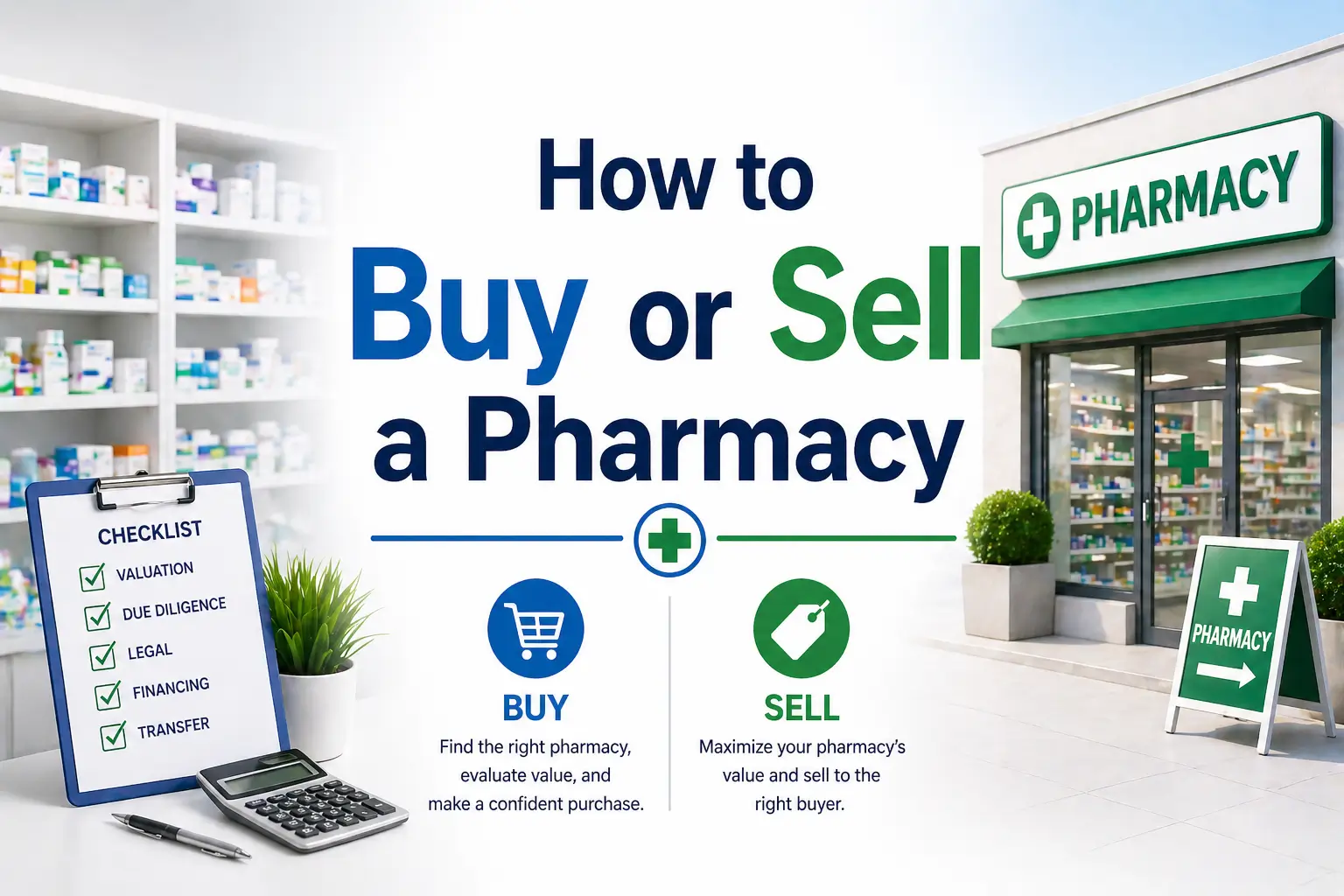
If you plan to buy or sell a pharmacy, having the right knowledge will help you avoid costly mistakes. Purchasing, or even selling, a pharmacy is a huge life choice with many moving parts. Whether you are trying to buy a new pharmacy business or sell your current one, being well-informed is imperative. You’ll be amazed at how, with the proper advice, you can make it turn out to be an easy and profitable one, too.
In this guide, we’ll break down the process of buy or sell a pharmacy, including how to prepare, what legal work needs to be done, valuing a pharmacy, and final agreements.
How to Buy or Sell a Pharmacy Successfully?
Pharmacy Buy-Sell Should be Well-Structured. The purchase or sale of a pharmacy is a decision that should be carefully orchestrated. It’s finding the right business, in the correct location, with a long-term growth potential for the buyers. For sellers, it’s all about positioning the company to appeal to qualified buyers for maximum value.
Working with industry professionals like Swift Trades makes this a point of order where you won’t miss any steps, stay in compliance, and get it done promptly.
Steps to Buy or Sell a Pharmacy (Buyer Guide)
Define Your Budget and Goals
Before you begin hunting, you’ll want to determine how much you’re ready to invest. Also, decide which type of pharmacy business you want to run: Retail, compounding, Independent, or chain, Urban, suburban, or rural area, Specialized services (long-term care, DME), Search for Listings
Seeks through a pharmacy brokerage firm such as Swift Trades for confirmed sales pharmacies. But they can also introduce you to sellers and tell you about the financials, the patient base, and future growth potential.
Perform Due Diligence
Due diligence is critical. You’ll want to review:
- Financial records (last 3 years)
- Prescription volume
- Insurance contracts
- Licenses and certifications
- Staffing and payroll
- Lease terms
That way, you can avoid getting cold feet and present an informed offer.
Secure Financing
You may have to finance your purchase with a business loan, SBA loan, or private financing. Your lender may also want a business plan and financial projections.
Finalize the Purchase
Draft the purchase agreement with the help of a lawyer. Process license transfers, register with the DEA, and notify third-party payers.
Steps to Buy or Sell a Pharmacy (Seller Guide)
Prepare Your Pharmacy for Sale
Before you start working on your pharmacy listings, you want to be sure your business is well-organized and profitable. Get your license current, wipe any legal problems, and clean up shop. Buyer’s confidence is only garnered by clean financials.
Get a Professional Valuation
Well, it’s because a proper valuation provides you with a realistic asking price. Key valuation factors include Annual revenue and net income, Prescription volume, Location and lease terms, Equipment and inventory, Type of services provided (eg, compounding, DME)
Swift Trades offers expert pharmacy valuations to suit your type of pharmacy.
Market to Qualified Buyers
After your pharmacy is listed, your broker will market it to qualified, interested buyers. Keeping the sale process obscure is also important this will cause less shock to the business and its employees.
Negotiate the Terms
Have your broker and attorney work to hammer out a deal that will include:
- Sale price
- Payment terms
- Asset or stock sale structure
- Non-compete agreements
- Transition plans
- Close the Sale
Once the sale is made, close the paperwork, notify state and federal institutions, and transfer the title without a hitch.
Legal Requirements for Buying or Selling a Pharmacy
When buying or selling, you’ll have to address the following:
- Pharmacy license transfer
- DEA registration
- NPI updates
- Medicaid and insurance credentialing
- State Board of Pharmacy notifications
- Business registration, tax ID changes
These procedures are taken to help maintain legal ability and fees post-sale.
Why Work With a Broker to Buy or Sell a Pharmacy?
A pharmacist’s buy or sell is a complicated transaction that requires knowledgeable help. A reputable pharmacy broker-dealer firm like Swift Trades can help with:
- Finding qualified buyers or sellers
- Valuation and financial analysis
- Legal documentation and negotiations
- Licensing and regulatory compliance
- Doing, however, privately and not at a snail’s pace
Whether you are a first-time home buyer or have bought a home before, buying a home is a big financial and emotional decision, and a broker should offer you the support you need to navigate both.
Why Planning Matters for Sell a Pharmacy Business?
A lot of pharmacy owners do not understand the significance of early preparation. Send this to me at least 1-2 years in advance so I have time to prepare. This will help you straighten business finances, increase profitability, and correct compliance problems, all of which could significantly raise the market value of your pharmacy.
Step 1: Get a Professional Valuation
The beginning of selling your pharmacy is knowing its worth. The prescription volume, payer contracts, revenue mix, customer base, and location are all considered in a professional pharmacy valuation. The proper valuation means you won’t leave money on the table – or ask too much in your business for sale, so you sell.
Step 2: Organize Financial and Legal Documents
Buyers want clarity and confidence. Relators should have three years’ worth of tax returns, profit and loss statements, DEA records, licenses, and contracts with suppliers and insurers ready. Comprehensive, accurate documentation can limit buyer indecision and expedite negotiations.
Step 3: Work with a Pharmacy Broker in selling a Pharmacy Business
Pharmacy sales are a very different beast from the sales of other small businesses. A pharmacy broker specializing in knows the regulations, the quirks of the industry, and the buyer pools. They can sell your pharmacy confidentially, negotiate better, and ensure you get yours while selling.
Step 4: Keep the Sale Confidential
Confidentiality is essential in sales. In the event employees, patients, or vendors find out about the sale ahead of time, this can disrupt your normal operations and reduce the value of your pharmacy. A broker can help you do that while preserving your privacy, yet reaching qualified buyers.
Step 5: Attract the Right Buyers
Sometimes, the highest bidder is not the best buyer. Look for buyers with sound financials, pharmacy savvy, solvency, and as much dedication to patient care as you have.” Vetting buyers well can help protect your reputation and smooth the transition.
Step 6: Negotiate More Than the Price in selling a pharmacy business
Buyers are not just looking at the purchase price in a pharmacy sale. The magic terms to note include the payment structure, the size of your future business, and employee retention language. Expert negotiation provides financial protection and peace of mind.
Step 7: Plan for a Smooth Transition
The deal is signed, and then the real work starts. The transitioning of documentation, stocks, permits, and insurance policies process shall be done without a glitch. It aids in the transition, ensures the patient keeps faith in the new company, and can continue with the company.
Final Thoughts
But if you’re buying or selling a pharmacy, it will be crucial to have a clear plan, understand the law, and work with professionals who understand the pharmacy industry. “The right team and preparation can make your transaction successful, profitable, and nearly stress-free.”